As a trusted supplier of marine concrete steel molds, I’ve witnessed firsthand the critical role that abrasion – resistance properties play in these products. In the harsh marine environment, where concrete steel molds are constantly exposed to various abrasive forces, understanding and optimizing these properties is essential for ensuring long – term performance and cost – effectiveness. Marine Concrete Steel Mold

The Abrasive Forces in Marine Environments
Marine environments present a unique set of challenges for concrete steel molds. One of the primary abrasive forces is the impact and friction caused by the concrete mixture itself. When concrete is being poured, mixed, and vibrated inside the mold, the large aggregates such as gravel and coarse sand rub against the inner surface of the mold. This continuous abrasion can gradually wear down the steel, resulting in a loss of surface smoothness and, in extreme cases, structural damage.
Another significant abrasive factor is the presence of saltwater. Saltwater contains various dissolved salts and minerals, which can act as abrasives over time. When saltwater splashes onto the steel mold or seeps into small cracks and crevices, it can cause corrosion. The corrosion products, in turn, can increase the friction between the mold and the concrete, exacerbating the abrasion process. Moreover, the tidal action and wave movement in the marine environment create additional mechanical forces that contribute to the wear and tear of the steel mold.
Key Abrasion – Resistance Properties
Hardness
Hardness is one of the most fundamental properties related to abrasion resistance. A harder steel mold is better able to withstand the abrasive forces exerted by the concrete and the marine elements. High – carbon steels, for example, are often used in the manufacturing of marine concrete steel molds because of their relatively high hardness. The hardness of the steel can be increased through various heat – treatment processes such as quenching and tempering. These processes alter the microstructure of the steel, making it more resistant to deformation and abrasion.
However, it’s important to note that hardness is not the only factor. If the steel is too hard and brittle, it may crack under the stress of the concrete pouring and vibration processes. Therefore, a balance must be struck between hardness and toughness to ensure the overall performance of the mold.
Surface Finish
The surface finish of the steel mold also has a significant impact on its abrasion – resistance properties. A smooth surface finish reduces the friction between the mold and the concrete, minimizing the abrasion caused by the movement of the concrete mixture. Additionally, a smooth surface is less likely to trap saltwater and other corrosive substances, preventing the formation of corrosion products that can further exacerbate abrasion.
To achieve a high – quality surface finish, advanced machining and polishing techniques are employed during the mold manufacturing process. For example, precision machining can ensure that the inner surface of the mold has a uniform and smooth texture. After machining, the mold may be polished to a mirror – like finish, which not only improves abrasion resistance but also makes it easier to remove the concrete from the mold after curing.
Coating and Plating
Applying a protective coating or plating to the surface of the steel mold is an effective way to enhance its abrasion – resistance properties. There are several types of coatings and platings available, each with its own advantages and disadvantages.
One common type of coating is the epoxy – based coating. Epoxy coatings are known for their excellent adhesion to steel surfaces and their resistance to corrosion and abrasion. They can form a strong barrier between the steel and the abrasive elements, protecting the mold from direct contact with the concrete and saltwater. Another option is electroplating, such as chrome plating. Chrome – plated surfaces are extremely hard and have a low coefficient of friction, making them highly resistant to abrasion.
Microstructure of the Steel
The microstructure of the steel has a profound influence on its abrasion – resistance properties. A fine – grained microstructure generally provides better abrasion resistance compared to a coarse – grained one. This is because fine – grained steels have more grain boundaries, which act as barriers to the movement of dislocations and the propagation of cracks.
During the steelmaking process, various alloying elements can be added to control the microstructure. For example, elements such as chromium, nickel, and molybdenum can improve the hardenability and corrosion resistance of the steel, resulting in a more favorable microstructure for abrasion resistance.
Testing and Evaluation of Abrasion – Resistance Properties
To ensure that our marine concrete steel molds meet the highest standards of abrasion resistance, we conduct a series of rigorous testing and evaluation procedures.
One of the most commonly used tests is the pin – on – disk test. In this test, a small pin is pressed against the surface of the steel mold sample, and the sample is rotated at a constant speed. The amount of wear on the sample is then measured after a certain number of rotations. This test can provide valuable information about the relative abrasion resistance of different steel materials and coatings.
Another important test is the immersion test. In this test, the steel mold sample is immersed in a saltwater solution for a specified period of time. After the immersion period, the surface of the sample is examined for signs of corrosion and abrasion. This test simulates the long – term exposure of the mold to the marine environment and helps us to evaluate its corrosion and abrasion – resistance properties.
Importance of Abrasion – Resistance for Our Customers
For our customers in the marine construction industry, the abrasion – resistance properties of our concrete steel molds are of utmost importance. A mold with high abrasion resistance can significantly reduce the maintenance and replacement costs associated with the construction process. Since the mold can withstand the abrasive forces over a longer period of time, it doesn’t need to be replaced as frequently, which translates into cost savings for the customer.
In addition, a mold with good abrasion resistance can produce high – quality concrete products. The smooth surface of the mold ensures that the concrete has a better finish, which is essential for many marine construction projects. For example, in the construction of marine piers and breakwaters, the surface quality of the concrete can affect its durability and aesthetic appearance.
Optimizing Abrasion – Resistance for Long – Term Performance
At our company, we are constantly working on optimizing the abrasion – resistance properties of our marine concrete steel molds. We invest in research and development to explore new materials, coatings, and manufacturing processes. For instance, we are currently investigating the use of advanced composite materials that combine the high strength of steel with the excellent abrasion resistance of other materials.
We also work closely with our customers to understand their specific needs and requirements. By tailoring our products to their unique applications, we can ensure that our molds provide the best possible performance in their respective marine environments.
Conclusion
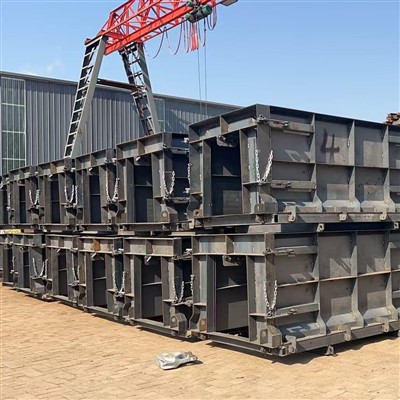
In conclusion, the abrasion – resistance properties of marine concrete steel molds are crucial for their performance and durability in the harsh marine environment. Through factors such as hardness, surface finish, coating and plating, and microstructure control, we can enhance the ability of our molds to withstand the abrasive forces exerted by the concrete and the marine elements.
Manhole Mould If you are in the market for high – quality marine concrete steel molds with excellent abrasion – resistance properties, we invite you to reach out to us for a detailed discussion. We are committed to providing you with the most suitable solutions for your projects and helping you achieve long – term success in the marine construction industry.
References
- Callister, W. D., & Rethwisch, D. G. (2012). Materials Science and Engineering: An Introduction. Wiley.
- Ashby, M. F., & Jones, D. R. H. (2012). Engineering Materials 1: An Introduction to Properties, Applications and Design. Butterworth – Heinemann.
- Schmitt, R. J. (2002). Steel Heat Treatment Handbook. McGraw – Hill.
Baoding Jianxin Mold Manufacturing Co., Ltd.
As one of the leading marine concrete steel mold manufacturers and suppliers in China, we also support customized service. Please feel free to buy high quality marine concrete steel mold for sale here and get quotation from our factory. For price consultation, contact us.
Address: Mould Manufacturing Industrial Zone, Wangting Town, Qingyuan District, Baoding City, Hebei Province
E-mail: xili89700@gmail.com
WebSite: https://www.jianxinmold.com/
