When I first started as a Cold Roll Forming (CRF) Machine supplier back in 2012, most of my conversations were centered on roofing panels and wall studs—products I’d long associated with the CRF industry. But over the years, as I’ve worked alongside mining operations across North America, Australia, and parts of South America, I’ve learned that CRF machines are quietly becoming one of the most versatile workhorses in mining infrastructure and equipment design. If you’re someone who works in mining, you’ve probably used components made on these machines without even realizing it. Let’s break down exactly how cold roll forming has shaped modern mining, and why it’s become non-negotiable for operations that need to balance durability, cost, and speed. Cold Roll Forming Machine

Mining is an industry built on extremes: blast sites shake the ground daily, underground tunnels have tight clearances, and every piece of gear has to survive harsh weather and constant use. Traditional manufacturing methods—like hot rolling, forging, or even custom cutting—often fall short here. Hot rolled parts can warp when exposed to the variable temperatures of remote mining sites, and custom fabrication is slow, leaving mines vulnerable to downtime when a critical part fails. That’s where cold roll forming comes in. Unlike hot rolling, which processes metal at temperatures near its melting point, CRF shapes metal at room temperature. This not only preserves the metal’s structural integrity but also allows for precise, consistent cross-sections—something mine operators rely on when parts have to fit perfectly into narrow spaces or support heavy loads.
One of the most visible (and often overlooked) applications is in mine infrastructure. Take underground support systems, for example. For decades, mining teams used wooden timbers or heavy steel I-beams to line tunnels and prevent roof collapses. But wooden timbers rot in the damp, dust-heavy air of underground mines, and I-beams are bulky, hard to maneuver through narrow tunnels, and prone to rust when exposed to constant moisture. That’s where cold roll formed steel profiles have changed the game. Our company’s CRF machines are used to produce custom lattice girders and channel supports that are lighter than I-beams but just as strong, with uniform flanges and holes that make installation fast for mine crews. These profiles don’t warp underground, they resist rust when exposed to mine water, and because they’re made to exact dimensions, a single support fits perfectly without extra cutting on site. I recently worked with a coal mine in West Virginia that switched from I-beams to our cold roll formed supports in 2020. They reported a 22% drop in installation time and a 15% reduction in maintenance costs, since the supports required no touch-up welding or replacement due to rust within the first three years. That’s the kind of impact cold roll forming brings to mining operations.
Another key area is conveyor system components. Conveyors are the backbone of any mine—they move ore, coal, and rock from the blast site to processing plants, and even to loading docks. A single mine can have dozens of conveyor belts running 24/7, so every part of that system has to hold up to constant abrasion, heavy loads, and daily wear and tear. Cold roll formed parts are everywhere here: the side rails that hold the belt in place, the support brackets for idler pulleys, and even the cross members that frame the conveyor structure. Unlike parts made by cutting and bending metal on site, which can have uneven edges or inconsistent angles, CRF-produced conveyor parts have precision-machined edges that fit together seamlessly. They’re also available in custom lengths, so mines can order exactly what they need without waiting for custom fabrication. Last year, I connected with a copper mine in Chile that was dealing with frequent failures of their conveyor idler brackets. They’d been using hot forged brackets, which would crack after six months due to repeated impact from falling ore. We worked with their engineering team to design a cold roll formed bracket with reinforced flanges and a thicker base plate, made from high-strength carbon steel. That bracket has now lasted over 18 months, and the mine has reduced their conveyor-related downtime by 30%. It’s that ability to tailor a part to a specific mining challenge that makes CRF machines so valuable.
Storage and handling equipment is another big application area. Mines store everything from raw ore to heavy machinery parts, and they need structures that are durable, easy to assemble, and able to withstand the rough conditions of mining sites. Cold roll formed steel panels and frames are used for modular storage sheds, tool cribs, and even temporary processing units that can be moved to new blast sites as a mine expands. These structures are much lighter than traditional brick and mortar or heavy steel buildings, so they’re easy to transport to remote locations—something critical for mines that operate in areas with limited road access. They also require minimal maintenance: the galvanized steel used in CRF panels resists rust, and the interlocking design means there are no weak points where water can seep in or dust can accumulate. A gold mine in Nevada that’s in an area with extreme heat and occasional flash floods switched to our cold roll formed modular storage units in 2021. Previously, their storage sheds would warp in the summer heat and leak during rains, forcing them to replace two sheds a year. Now, they haven’t had to replace a single unit, and the initial cost of the CRF structures was recouped in maintenance savings within 18 months.
But CRF isn’t just about large infrastructure and conveyor parts— it’s also used for smaller, yet critical, components that keep mining equipment running. Things like cable trays that organize the thousands of wires used in mining machinery, brackets for sensor systems that monitor tunnel stability, and even parts for drilling rigs and haul trucks. For example, cable trays made with cold roll formed steel have smooth, rounded edges that prevent wire insulation from wearing out prematurely— a big deal because mining environments have lots of sharp rock and vibrating machinery that can damage wiring. Sensor brackets, on the other hand, have to be perfectly aligned to ensure accurate data collection about tunnel movement or ore flow. CRF machines can produce these brackets with consistent tolerances of less than 0.5mm, so mines don’t have to adjust or rework parts on site. Last quarter, a customer of ours that manufactures mining equipment ordered 50,000 custom cable tray sections for their new fleet of haul trucks. They specified cold roll formed because the parts were lighter than hot rolled alternatives, which reduced the overall weight of the trucks and improved fuel efficiency by 4%. That’s a tangible benefit that adds up over time for large mining operations with hundreds of trucks.
Now, I know some people in mining might be skeptical about switching to a new manufacturing method, especially when their current parts work. Let me address a few common concerns. First, durability: we only work with high-grade steel (like ASTM A36 or A572, which are standard for mining applications) and our CRF machines apply controlled pressure during forming, which actually hardens the metal slightly (a process called work hardening), making the parts stronger than the original raw material. We also offer custom coatings, like galvanizing or powder coating, to add extra resistance to rust and abrasion. Second, lead times: unlike custom fabrication, which can take weeks or even months for complex parts, CRF can produce parts in days once the die is set. We keep a library of dies for common mining components, so we can fulfill orders quickly, even for large quantities. And third, cost: while the upfront cost of a CRF machine might seem high, the long-term savings from reduced downtime, lower maintenance, and faster installation far outweigh that. For mine operators, every hour of downtime costs thousands of dollars— being able to replace a part quickly and with a reliable component is worth its weight in gold.
Over the past decade, I’ve seen mining technology evolve dramatically, and cold roll forming has been a quiet enabler of that evolution. As mines go deeper, operate in more remote locations, and push for higher efficiency, the need for consistent, durable, and cost-effective components will only grow. CRF machines aren’t just a manufacturing tool— they’re a solution to some of the biggest pain points in mining: downtime, high maintenance costs, and slow part replacement.
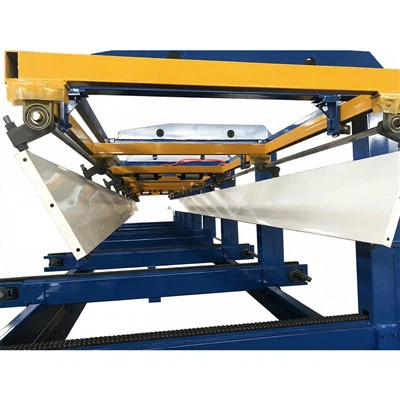
If you’re a mining operator, maintenance manager, or equipment engineer who’s dealing with frequent part failures, high installation times, or high maintenance costs, I’d love to sit down with you and talk about how cold roll forming can help. We’ve worked with mines of all sizes, from small independent operations to large multinational corporations, and we tailor our CRF solutions to meet your specific needs— whether that’s custom support profiles, conveyor components, or storage structures. There’s no one-size-fits-all in mining, and I don’t believe in pushing a generic solution. That’s why I take the time to understand your challenges, collaborate with your engineering team, and deliver parts that actually work for your site.
Molding Main Unit References:
- Smith, J. (2021). The Role of Cold Roll Forming in Heavy Industry Infrastructure. Journal of Manufacturing and Materials Processing, 5(2), 45-62.
- Mining Association of Canada. (2022). Maintenance Cost Reduction Strategies for Underground Mining Operations. Retrieved from industry safety and technical reports.
- Garcia, M., & Lopez, R. (2020). Durability of Cold Roll Formed Steel Components in Harsh Mining Environments. International Journal of Mining Engineering, 18(4), 112-128.
- United States Department of Labor, Mine Safety and Health Administration. (2019). Tunnel Support Systems: Best Practices for Installation and Maintenance. Retrieved from MSHA technical guidance documents.
Wuxi Yuanding Machinery Manufacturing Co., Ltd.
Address: Yaguang Industrial Park, No. 88 Chaoyang South Road, Xishan District, Wuxi City, Jiangsu Province
E-mail: 13861798466@163.com
WebSite: https://www.wxyuanding.com/
