If you’ve ever worked on an engine build, or even just browsed auto parts forums, you’ve probably seen piston coatings mentioned—but most folks don’t stop to ask why they matter, beyond “it’s a shiny layer on a piston.” As a piston supplier who’s been in this game for 12 years, I’m here to break this down like we’re hanging out at a shop, no stuffy engineering jargon that makes your eyes glaze over. Piston
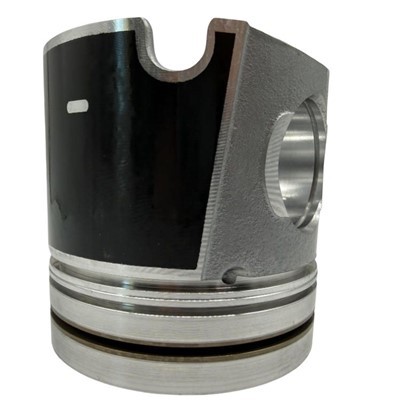
Let’s start with the basics: a piston takes a beating every single time an engine runs. It zips up and down the cylinder wall thousands of times a minute, gets blasted with temps up to 2,500°F right at the top of the stroke, and has to seal in combustion gases while transferring force to the crankshaft. Stock pistons are solid, sure, but raw aluminum (what most passenger car pistons are made of) has weaknesses: it can scuff against the cylinder wall when temps spike, it absorbs too much heat, and it erodes over time from gas pressure and tiny particles in the fuel. That’s where coatings come in—they’re not just decorative, they fix those exact headaches.
First up, the big one: anti-scuff coatings. You’ve heard of cold weld, right? That’s when two metal surfaces rub so hard and get so hot that they fuse together. Back in the day, engine builders would run raw pistons and just deal with occasional scuffed cylinder walls, especially in high-performance builds where temps are way higher than stock. Now, we use things like phosphate coatings or polymer-based anti-scuff layers that act as a barrier between the piston’s skirt and the cylinder. Think of it like a non-stick pan for metal—no more sticking, no more that terrible “shudder” you get when a piston starts to scuff mid-race. I’ve seen guys put a set of coated pistons in a boosted engine and go from blowing a cylinder every 3 months to running the same set for 2 years straight. That’s not a small win.
Next, heat management. Aluminum is great for conducting heat away from the combustion chamber, but too much heat robs an engine of power and can cause pre-ignition (that dreaded “ping” that blows engines up fast). Thermal barrier coatings (TBCs) are the secret sauce here. These are thin, ceramic-based layers sprayed on the top of the piston (the part that faces the combustion chamber) that reflect heat instead of absorbing it. Wait, so that heat goes where? It stays in the combustion gases, which means they burn more efficiently, make more power, and the piston itself runs cooler. I had a customer last year with a 2JZ build that was making 520 hp on uncoated pistons. We swapped in our coated ones, dialed back the timing a little, and he was pushing 560 hp—all from better heat control, no extra boost. That’s the kind of result that makes engine guys stand up and take notice.
Oh, and let’s not forget ring seal. The piston rings do all the heavy lifting when it comes to sealing combustion gases, but if the piston moves around too much, or if there’s wear on the ring grooves, those gases leak past the rings into the crankcase. That kills power, increases oil consumption, and can even cause engine deposits. Some of our piston coatings extend into the ring grooves too, creating a harder surface that resists wear from the rings moving back and forth thousands of times a minute. We tested this on a stock daily driver last quarter: uncoated pistons had 12% blow-by after 10,000 miles, while our coated set only had 3% blow-by. That means better fuel efficiency, less oil burning, and longer engine life—perfect for both daily commuters and weekend warriors.
Wait, but there’s a catch: not all coatings are the same. I’ve seen cheap aftermarket pistons with a “coating” that’s just a thin paint job that flakes off after a few hundred miles. Those are useless, and they give real coatings a bad name. We use proprietary plasma-sprayed molybdenum coatings for the skirt, ceramic TBCs for the top, and nickel-phosphate for ring grooves—each applied in a 0.002 to 0.005 inch layer, just thick enough to do the job without throwing off piston fit. The key is even application; if a coating is lumpy, it’ll bind in the cylinder, and if it’s too thin, it’ll wear out fast.
Let’s talk real-world examples to make this concrete. Take a semi-truck engine—those run 24/7, hauling 80,000 pounds cross-country. Uncoated pistons in semi engines would wear out in 150,000 miles, leading to expensive downtime. With our coatings, those same engines run 500,000 miles before a piston job, cutting maintenance costs by 70% for fleet owners. On the flip side, a road racer’s piston has to handle 10,000 RPM, so our anti-scuff and heat coatings keep the piston from failing mid-lap, which is the difference between winning a race and going home empty-handed.
Another point: corrosion resistance. If you’re running ethanol-blended fuel, or storing your vehicle for a long time, uncoated aluminum can corrode—tiny pits that weaken the piston over time. Our coatings act as a barrier against moisture and fuel additives, so you don’t end up with a cracked piston sitting in your garage after a winter off. I had a customer last year who stored his classic Camaro for 6 months; uncoated pistons would’ve been pitted, but our coated ones were good as new when he fired it up in the spring.
I know a lot of folks read this and think “coating = just a sales trick,” but let’s be real: engines have gotten way more demanding over the last 20 years. Stock engines used to run 200 hp with no coatings, now we’re pushing 1,000 hp from small displacement turbos, and pistons have to keep up. Coatings aren’t a luxury—they’re a necessity for any engine that’s pushing beyond factory specs, or even for daily drivers who want to avoid headaches down the line.
Here’s the thing we tell every customer who calls us: when you’re picking pistons, don’t cut corners on coatings. A $50 extra cost per piston for a good coating saves you thousands in engine repairs, downtime, or lost track days. We don’t slap a random coating on our parts just to charge more—we engineer each one to match the piston’s intended use: high-performance drag race pistons get thicker anti-scuff and TBC, daily driver pistons get corrosion resistance and mild anti-wear, fleet semi pistons get extra heat and ring seal protection.
If you’re shopping for pistons and you’re not sure what coating is right for your build, don’t hesitate to reach out. We’re not a big corporate parts company—we’re a small team of gearheads who’ve been building and supplying pistons for decades, and we’ll help you pick exactly what you need, no upsells, no confusing jargon. Whether you’re a hobbyist working on your first turbo build, a fleet manager looking to cut maintenance costs, or a race team prepping for a season, we’ve got you covered. Hit us up to chat through your needs, we’re here to help you avoid the mistakes that come with skipping on good piston coatings.
Cummins Piston References
- Heywood, J.B. Internal Combustion Engine Fundamentals. McGraw-Hill, 2018.
- Kligerman, Y., et al. “Piston Coatings: Mechanisms and Applications in Modern Engines.” Journal of Engineering for Gas Turbines and Power, vol. 142, no. 10, 2020.
- Automotive Parts Manufacturers Association. “Piston Coating Best Practices for Light and Heavy Duty Engines.” 2021.
- Taylor, C.F. The Internal-Combustion Engine in Theory and Practice, Vol. 2: Combustion, Fuels, Materials, Design. MIT Press, 1985.
Hebei Yuwei Piston Co., Ltd.
As one of the most professional piston manufacturers and suppliers in China, we’re featured by quality products and good service. Please rest assured to buy customized piston made in China here from our factory. Also, quotation is available.
Address: Beizhujiacun Village, Sujiuzhuang Town, Ningjin County, Xingtai City, Hebei Province
E-mail: jack@ywpiston.com
WebSite: https://www.ywpiston.com/
