As a supplier of MPPT (Maximum Power Point Tracking) charge controllers, I often receive inquiries from customers in hot climates about the suitability of our products for their environments. This blog post aims to provide a comprehensive answer to the question: Can an MPPT charge controller be used in a hot climate? Mppt Charge Controller
Understanding MPPT Charge Controllers
Before delving into the impact of hot climates on MPPT charge controllers, it’s essential to understand how these devices work. An MPPT charge controller is a crucial component in a solar power system. Its primary function is to maximize the power output from solar panels by continuously adjusting the electrical operating point to the maximum power point (MPP). This is achieved by tracking the changing environmental conditions, such as sunlight intensity and temperature, to ensure that the solar panels are operating at their most efficient level.
The Effects of High Temperatures on Solar Panels
Solar panels are sensitive to temperature. As the temperature rises, the efficiency of solar panels decreases. This is because the increase in temperature causes an increase in the internal resistance of the solar cells, which in turn reduces the output voltage and power. For every degree Celsius increase in temperature above 25°C, the power output of a solar panel can decrease by approximately 0.5%.
How MPPT Charge Controllers Respond to High Temperatures
MPPT charge controllers are designed to adapt to changing environmental conditions, including high temperatures. They use advanced algorithms to track the MPP of the solar panels, even when the temperature is high. By continuously adjusting the operating point, the MPPT charge controller can compensate for the decrease in solar panel efficiency caused by high temperatures.
In a hot climate, the MPPT charge controller can still effectively extract the maximum power from the solar panels. It does this by adjusting the voltage and current to match the changing characteristics of the solar panels. For example, when the temperature is high, the MPPT charge controller will lower the voltage to maintain the maximum power output.
Thermal Management in MPPT Charge Controllers
To ensure reliable operation in hot climates, MPPT charge controllers are equipped with thermal management systems. These systems are designed to dissipate heat and prevent the controller from overheating. Some common thermal management features include heat sinks, fans, and thermal protection circuits.
Heat sinks are used to increase the surface area of the controller, allowing for better heat dissipation. Fans are used to circulate air around the controller, further enhancing the cooling effect. Thermal protection circuits are designed to automatically shut down the controller if the temperature exceeds a certain threshold, preventing damage to the device.
Case Studies: MPPT Charge Controllers in Hot Climates
To illustrate the effectiveness of MPPT charge controllers in hot climates, let’s look at some real-world case studies.
In a solar power project in the Sahara Desert, where temperatures can reach up to 50°C, an MPPT charge controller was installed. Despite the extreme heat, the controller was able to maintain a high level of efficiency, extracting the maximum power from the solar panels. The thermal management system of the controller effectively dissipated the heat, preventing overheating and ensuring reliable operation.
In another project in the Australian outback, where temperatures can exceed 40°C, an MPPT charge controller was used to power a remote off-grid system. The controller was able to adapt to the high temperatures and continuously optimize the power output from the solar panels. This resulted in a significant increase in the overall energy production of the system.
Factors to Consider When Using MPPT Charge Controllers in Hot Climates
While MPPT charge controllers can be used in hot climates, there are several factors to consider to ensure optimal performance.
- Ventilation: Adequate ventilation is essential to prevent the controller from overheating. Make sure the controller is installed in a well-ventilated area, away from direct sunlight and other heat sources.
- Mounting: The controller should be mounted in a way that allows for proper heat dissipation. Avoid mounting the controller in a confined space or against a wall.
- Temperature Rating: When selecting an MPPT charge controller, consider the temperature rating of the device. Choose a controller that is designed to operate in high-temperature environments.
- Maintenance: Regular maintenance is important to ensure the long-term performance of the controller. Check the controller for signs of overheating, such as discoloration or melting, and clean the heat sinks and fans regularly.
Conclusion
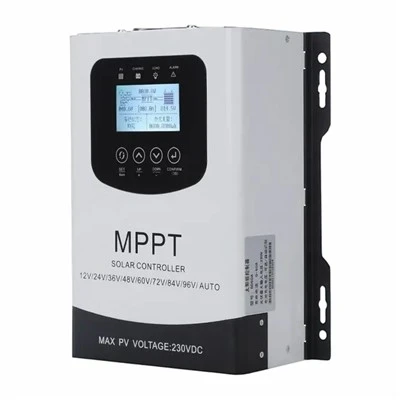
In conclusion, an MPPT charge controller can be used in a hot climate. These devices are designed to adapt to changing environmental conditions and can effectively extract the maximum power from solar panels, even in high-temperature environments. With proper thermal management and installation, MPPT charge controllers can provide reliable and efficient operation in hot climates.
Forklift Charger If you are considering using an MPPT charge controller in a hot climate, I encourage you to contact us for more information. Our team of experts can help you select the right controller for your specific needs and provide you with guidance on installation and maintenance. We are committed to providing high-quality products and excellent customer service, and we look forward to working with you to achieve your solar power goals.
References
- Duffie, J. A., & Beckman, W. A. (2013). Solar engineering of thermal processes. John Wiley & Sons.
- Lorenzo, E. D., & del Cueto, J. A. (2003). Temperature dependence of PV performance: a review of efficiency/ power correlations. Progress in Photovoltaics: Research and Applications, 11(2), 113-127.
Huizhou Qiangfeng Power Technology Co., Ltd.
Huizhou Qiangfeng Power Technology Co., Ltd. is one of the most professional mppt charge controller manufacturers and suppliers in China, featured by quality products and good service. We warmly welcome you to buy customized mppt charge controller made in China here from our factory. If you have any enquiry about quotation and free sample, please feel free to email us.
Address: No. 28, Hu’ao Avenue, Shiwan Town, Boluo County, Huizhou City, Guangdong Province
E-mail: Komco@Jinlidianqi.cn
WebSite: https://www.autobatterychargers.com/
