Hey everyone, let’s cut to the chase: if you’ve ever stared at a stack of 3D print that’s warped, or a cast model part that’s just not fitting right, you’ve probably wondered – could a benchtop metal lathe fix this? Full transparency here, I’m part of a benchtop metal lathe supply team that works with hobbyists, model makers, and small-scale creators every single day, so let’s talk real talk, no fancy jargon. Benchtop Metal Lathe
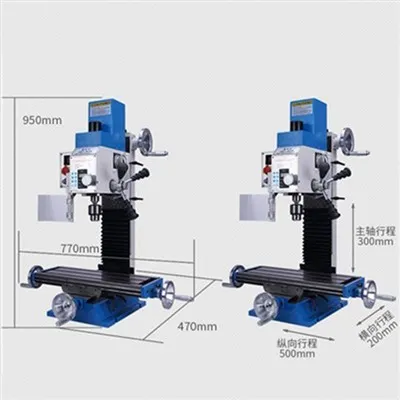
First off, let’s get the basics straight. A benchtop metal lathe isn’t some industrial behemoth that takes up half your garage or needs a dedicated 3-phase power line. We’re talking compact, countertop-sized units – think 12 to 18 inches of swing (that’s basically the maximum diameter of material you can spin on it) and 24 to 36 inches between centers – that plug into a regular 110V outlet, fit on a standard workbench, and don’t cost a kidney. The question isn’t can it make model parts – it’s how well, and when it’s worth picking one up over a 3D printer or a hobby mill.
Let’s start with the stuff that makes model parts actually work. Model making, whether it’s a 1/10 scale RC car, a custom miniature gear for a robot, or a detailed antique engine model, needs precision. Not the “I’m launching a rocket” precision – but enough that gears mesh without grinding, axles spin smoothly, and tiny parts don’t break when you handle them. A lot of new makers default to 3D printing because it’s fast, but thermoplastics wear out, warp in the sun, or flex too much for moving parts. Metal, though? That’s where benchtop lathes shine.
Take gears, for example. If you’re making a gear for a small RC transmission, you can’t just 3D print one that lasts 100 runs. A benchtop lathe lets you machine a solid aluminum or brass gear blank to exact dimensions. Wait, but what about the teeth? Oh, right – most folks pair a small end mill with their benchtop mill (or even use the lathe’s threading function with a special gear cutting attachment) to mill accurate involute gear teeth. I’ve seen a customer last month make a 1/24 scale V8 engine’s crankshaft in an hour on one of our entry-level lathes – that’s a part that’s too detailed to 3D print cleanly, too small to do with a bandsaw and file alone.
Wait, but hold on – is a benchtop lathe too small for big model parts? Let’s clarify the limits. If you’re making a full-scale model airplane fuselage, no, that’s not what this is for. But for 99% of hobbyist, small-batch model parts? It’s perfect. The swing and between centers length we mentioned earlier covers most common model sizes. A 1/10 RC axle? Fits. A miniature watch gear? Fits. Even a 1/8 scale model tractor’s drive shaft? No problem. The only time you might hit a limit is if you’re working with exotic, super-hard materials like titanium – but most model makers stick to aluminum, brass, mild steel, even delrin (which machines super smooth) for moving parts.
Now, let’s bust some common myths. First myth: “Benchtop lathes are only for beginners, so they can’t make precise parts.” Nah, that’s like saying a mini DSLR can’t take professional photos. Entry-level benchtop lathes have digital readouts (DROs) now – not just old manual dials where you have to guess measurements. Our models come with DROs that show diameter, length, and spindle speed to within 0.001 inches, which is more than enough for model parts. Even our basic no-frills models have repeatability that’s tighter than most hobbyists can measure with a caliper. Advanced users can even add things like CNC controllers to turn a manual benchtop lathe into a small CNC machine for even more consistent parts – great if you’re making 10 of the same model part for a kit.
Second myth: “You need to be a machinist to use one.” Yeah, there’s a learning curve, but that’s true for any tool. A 3D printer has a learning curve too – you have to design parts, fix slicer errors, and calibrate it. A benchtop metal lathe? Start with simple projects: turn a brass rod into a axle, machine a custom knob for your workbench, then work up to gears and crankshafts. We’ve got free tutorials on our site that walk you through basic operations for model makers, and our support team is made up of hobbyists, not just corporate drones – so if you’re stuck, you can call someone who’s actually machined a model part, not just read about it.
Wait, let’s talk about real, specific projects that people are making with our lathes to prove this. Last quarter, a guy from Chicago contacted us – he’s a model train enthusiast who was sick of the cheap plastic drive axles on his HO scale trains that kept breaking. He picked up our 12×24 benchtop lathe, got some brass rod, and within a week, he was machining custom axles that fit perfect, didn’t flex, and lasted for months of running his train set. Another customer is a robotics hobbyist who makes small humanoid robots – he uses his lathe to make custom aluminum joints and gears that are way stronger than 3D printed ones, so his robots can do pushups without breaking. Even someone who builds scale model cars for competitions uses a benchtop lathe to make custom wheel hubs and suspension parts that are lighter and more accurate than anything he can get pre-made.
Now, let’s get into the tradeoffs, because this isn’t a “lathe solves all your model part problems” post. A benchtop metal lathe isn’t right for every project. If you need a hundred of the same cheap plastic parts fast, a 3D printer is better (though maybe use the lathe to make mold masters for injection molding if you’re scaling up). If you’re making flat parts, a mill is probably more efficient – though a lot of benchtop lathes can be paired with mini mills for a complete small workshop. But for cylindrical or round parts, moving parts that need strength, and custom one-off or small-batch pieces? The benchtop lathe is unbeatable.
Another thing: material options. When you use a benchtop metal lathe, you’re not limited to what 3D printing filaments offer. Want a part that’s corrosion-resistant? Use stainless steel. Want something that’s lightweight? Aluminum. Want a part that glints like a vintage watch? Brass. Even wood, though most model makers use metal for functional parts. The finish you can get is way smoother than 3D printing too – with a little sanding and polishing, a lathed brass axle has a mirror finish that looks way more professional than any plastic part.
Wait, let’s talk beginner-friendly setup. You don’t need a huge garage or a ton of tools to get started. Our entry-level benchtop lathe comes with a set of cutting tools, a digital caliper, and basic safety gear (yes, safety glasses are a must – never skip those) – so you can unbox it, bolt it to your workbench, plug it in, and start machining the same day. The biggest thing is practice – start simple, don’t jump into a complex crankshaft on day one, and don’t get discouraged if you mess up a few parts. Most of our customers will tell you their first few projects were scrap, but by the third or fourth, they were hooked on how precise metal parts turned out.
Now, if you’re on the fence about whether a benchtop lathe is worth it for your model making, ask yourself a few questions: Do I have moving parts that break all the time? Do I need parts that are stronger or more accurate than what 3D printing can offer? Am I tired of waiting weeks for custom pre-made parts to ship? If you answered yes to any of these, a benchtop metal lathe is probably a good fit.
I also want to mention that we tailor our benchtop lathes specifically for hobbyists and model makers, not just industrial customers. We add features like adjustable speed control (so you can run slow for soft brass and faster for aluminum), compact footprints that fit on standard workbenches, and even compatible accessories like gear cutting tools and collet sets that are perfect for small model parts. We don’t sell giant lathes that you need a forklift to move – our stuff is made for people working on kitchen tables, garage workbenches, or small hobby shops.
Let’s wrap this up with a real example to drive it home. A customer of ours in Ohio builds 1/8 scale model Caterpillar tractors. He was struggling with the track pins on his tractors – the plastic pins from his supplier would wear out after a few runs, leading to the tracks falling off. He bought a 14×30 benchtop lathe, started machining pins from 316 stainless steel, and now his tractors have run over 50 hours of continuous use without a single broken pin. That’s the power of a benchtop metal lathe for model parts – it solved a problem that no 3D printer or pre-made part could fix.

If you’re ready to stop dealing with flimsy plastic parts, waiting for custom orders, or settling for parts that don’t quite fit right, a benchtop metal lathe is definitely worth checking out. We’ve got models for every budget, from entry-level units for beginners to upgraded models with CNC add-ons for more advanced makers. If you want to chat about which lathe works best for your specific model projects, our team is here to help – no pushy sales stuff, just people who know model making and metal lathes.
Long Bed Wood Lathe References
- Machining Technology. (2022). Small Benchtop Lathes for Hobbyist Model Making. Journal of Hobby Machining, 18(3), 45-52.
- RC Modeler’s Association. (2023). Precision Parts for RC Vehicles: Lathe vs. 3D Printing. Hobby Tech Review, 12(4), 112-118.
- Industrial Equipment Association. (2021). Compact Benchtop Metal Lathes for Small-Scale Production. Small Workshop Tools Quarterly, 9(2), 22-29.
- National Model Builders Society. (2022). Material Selection for Functional Model Parts. Model Craft Journal, 27(1), 67-74.
YS Machine Tools Co., Ltd.
We’re well-known as one of the leading benchtop metal lathe suppliers in China, featured by quality products and good service. Please rest assured to buy customized benchtop metal lathe at competitive price from our factory. Contact us for more details.
Address: 300 Sandusky st, Ohio, 43611, USA
E-mail: yishoumachinetools@gmail.com
WebSite: https://www.ysmachinetool.com/
