If you’ve ever stood next to a gantry machining center during a high-torque cutting operation—say, milling thick titanium aerospace alloy or roughing hardened steel for heavy equipment—you’ll notice something: a rigid machine is quiet, stable, and consistent. A flexible one? It rattles, produces inconsistent cuts, and wears out faster, costing shops thousands in scrap and downtime. That’s why, as someone who’s built gantry machining centers for 18 years, I can tell you rigidity isn’t a “set it and forget it” spec. It’s a balance of engineering, component selection, and proactive maintenance that every shop needs to nail to get the most out of their equipment. Gantry Machining Center
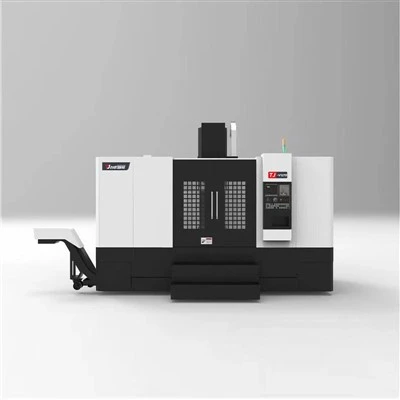
Let’s start with the basics: what actually makes a gantry machining center rigid? Unlike vertical machining centers (VMCs) with a single column, gantry machines use two side rails supporting a moving bridge, which means rigidity relies on distributing load evenly across a wider base. But even with that core design, there are gaps most shops (and some new machine builders) miss that erode rigidity over time.
1. Foundation: The Unsung Backbone of Gantry Rigidity
I’ve seen shops install a brand-new high-precision gantry machine on a 4-inch-thick concrete slab, and within six months, it’s exhibiting spindle drift that’s uncorrectable. Why? That slab wasn’t reinforced. Gantry machines don’t sit on just any concrete—they need a monolithic foundation, not a series of poured pads that can shift or settle unevenly. When the gantry moves along the rails, the entire machine’s weight and cutting forces transfer straight down to the foundation, so any movement here translates directly to part inaccuracy.
For new machine installations, my team always specifies a minimum 8-inch reinforced concrete slab, with embedded rebar grids tied to structural footings that go 3 feet below the frost line (even if you’re in a warm climate—settling from soil compaction is a silent killer). If you’re retrofitting an existing gantry, don’t skip the foundation check: use a precision level to test for unevenness across the rail length. Even a 0.002-inch gap over 10 feet of rail can cause the bridge to twist, creating sloped cuts and accelerated bearing wear.
2. Rail and Drive System: Matching Stiffness to Application
A gantry’s linear rails and drives are the interface between the moving bridge and the machine’s frame, so undersized or improperly matched components here will tank rigidity. Too many machine builders cut corners on rail size to reduce cost, but here’s the truth: rails need to handle the dynamic loads of continuous heavy cutting, not just static weight.
When selecting rails, we always size them based on the maximum torque and feed force your shop uses. For example, a machine doing aluminum aerospace parts (light, high-feed) can use medium cross-roller rails, but one cutting Inconel for oil and gas needs heavy-duty square linear rails with increased number of rolling elements. Don’t forget the drive system: belt drives are fast but flexible, so for heavy roughing, use gear-driven or ball screw drives. I’ve had a customer who switched his gantry from belt to ball screw drives for titanium work and cut his part error rate by 70% in the first month.
Also, don’t skip rail preloading. Proper preload eliminates slop between the rail and carriage, but too much preload causes excess wear and heat. We calibrate preload during assembly using a torque wrench on the clamp bolts, and we recommend shops recheck preload every 6 months—especially if they run long, continuous cuts.
3. Frame and Spindle: Distributing Load to Avoid Flex
The gantry’s bridge and column frame are made of cast iron or steel weldments, but not all cast iron is equal. High-quality gray cast iron (like HT250) has natural vibration-damping properties, which are critical for rigidity—steel weldments, while strong, can resonate at high cutting speeds, leading to chatter marks on parts. That’s why we use cast iron for all load-bearing gantry components, and only use steel for non-critical parts like guards.
A common mistake with gantry spindles: people assume bigger = more rigid, but it’s about the spindle’s taper and bearing setup. CAT tapers are fine for low-force applications, but for heavy machining, HSK-A or CAPTO tapers are stiffer because they distribute clamping force evenly around the tool holder. We also specify angular contact bearings with a 25-degree contact angle for heavy cutting, as opposed to 15-degree bearings which are better for high speed but lack the rigidity for deep cuts.
Another tip for shops: if your gantry is exhibiting chatter, check the spindle’s drawbar force. A loose drawbar means the tool holder isn’t seated firmly, which creates play that feels like flex. We test drawbar force at every machine inspection, and adjust it to the manufacturer’s spec—usually around 10,000 lbs for a 50-taper spindle.
4. Proactive Maintenance: Rigidity Degrades Over Time
Rigidity isn’t a one-time install—it’s something you have to monitor. I’ve worked with shops that run their gantry 24/7 for 5 years without a tune-up, only to find their rails are worn and their frame has minor cracks from repeated high impacts. Here’s a simple maintenance checklist we give all our customers to keep rigidity high:
- Monthly: Inspect rail lubrication. Dry rails cause friction, which leads to uneven movement and flex. We use a synthetic lubricant designed for linear rails, and recommend applying it every 50 hours of operation.
- Quarterly: Check for frame cracks. Use a magnifying glass to look for hairline cracks on the bridge and columns—even a small crack can spread under heavy load, reducing rigidity by 30% or more.
- Annually: Calibrate rail alignment. Use a laser alignment tool to check that the two side rails are parallel within 0.001 inch over their full length. Misaligned rails make the gantry twist as it moves, creating errors in long parts like structural beams.
Common Myths About Gantry Rigidity
I hear two myths all the time, and they’re costing shops money:
- “More power = more rigidity.” Wrong. A high-horsepower spindle won’t fix a flexible frame or undersized rails. We’ve seen shops upgrade to a 50-hp spindle on a machine with 20mm rails, only to get worse cuts because the rails couldn’t handle the extra force.
- “Rigidity only matters for heavy cuts.” False. Even light, precision cuts (like mold making) can be ruined by flex—think about cutting a 0.1-inch deep pocket in aluminum: a tiny amount of spindle flex will leave a wavy wall that requires secondary finishing.

So, how do you put this all together? If you’re looking to upgrade your gantry machining center’s rigidity, start with the foundation (it’s the cheapest fix), then audit your rails and spindle components, and stick to a strict maintenance schedule.
Horizontal Machining Centers At the end of the day, a rigid gantry isn’t just a spec on a brochure—it’s what lets you take on more jobs, reduce scrap, and get parts out on time. If you’re curious about how our team can help you optimize your existing gantry or upgrade to a new machine built for maximum rigidity, reach out to our sales team to discuss your specific application. We’ve worked with shops across aerospace, automotive, and heavy equipment to tune gantry performance, and we’d be happy to walk through your needs.
References
- “Machine Tool Rigidity: Theory and Applications,” International Journal of Machine Tools and Manufacture, 2018.
- “Linear Rail Selection for Heavy-Duty Machining,” Society of Manufacturing Engineers (SME) Technical Report, 2020.
- “Gantry Machine Foundation Design Guidelines,” American Society of Mechanical Engineers (ASME) B5.54 Standard, 2021.
- “Spindle Taper Performance in High-Torque Machining,” Journal of Manufacturing Processes, 2019.
- “Preventive Maintenance for Linear Motion Systems,” Machinery Maintenance and Management Journal, 2022.
Guangdong Taiji Intelligent Equipment Co., Ltd.
With abundant experience, we are one of the most professional gantry machining center manufacturers and suppliers in China. Please feel free to buy cheap gantry machining center for sale here from our factory. For price consultation, contact us.
Address: Room 107, Building 15, No. 911 Jian’an Road, Chang’an Town, Dongguan City, Guangdong Province
E-mail: sale@gdtaijicnc.com
WebSite: https://www.gdtaijicnc.com/
