Hey there, folks! Let’s cut to the chase – if you’ve ever walked a construction site, you know EPS (that’s expanded polystyrene, the white “styrofoam” everyone loves to hate) is everywhere. It’s in the insulation panels for walls, the packing blocks for concrete forms, even the lightweight void fill under sidewalks. But here’s the problem: most of that stuff ends up in landfills, right? Because people assume EPS is “unrecyclable” or that there’s no way to process it without making a mess. As someone who runs an EPS recycle system supply business, I get it – I used to hear the same garbage from construction teams and waste managers all the time. But let me tell you, after seeing what our systems can do? That narrative is total B.S. EPS Recycle System

First off, let’s talk about why construction EPS is such a headache. Unlike the little coffee cups or takeout containers you see at recycling centers, construction EPS is usually way bulkier and way more contaminated. You’re not dealing with a single clean block – you’ve got EPS insulation covered in concrete dust, construction adhesive, maybe even some leftover paint drips, and it’s often cut into random sizes or smashed flat. Most municipal recycling programs don’t have the equipment to handle that kind of mixed, dirty EPS. They either send it to a landfill or a “special” recycling plant that charges a fortune to process it. That’s where we come in. Our EPS recycle systems aren’t some fancy, out-of-reach tech – they’re built specifically for construction waste, and they work.
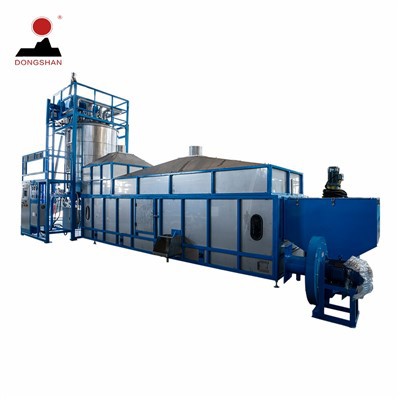
Wait, let’s back up for a second. What even is an EPS recycle system, exactly? I don’t want to throw jargon at you, so let’s keep it simple. It’s a series of machines that take your messy, contaminated EPS construction waste and turn it into something useful. The first step is a shredder – it tears that big block into tiny, consistent pieces, no matter how jumbled or dirty it is. Then, we have a dedicated cleaning unit that uses water and mild, eco-friendly detergents to blast off all that concrete dust, glue, and paint. I know what you’re thinking: “Water and EPS? Won’t that make a mess?” Nope, the system recycles 98% of the water we use, so you’re not wasting a drop. After cleaning, it goes through a drying stage – a mix of hot air and centrifugal force gets it bone dry in like 10 minutes. The last step is a compactor that squishes that clean EPS down to 1/50th of its original size. Suddenly, a whole dumpster full of EPS is just a tiny bin of dense pellets. That’s the magic right there – those pellets aren’t just trash; they’re raw material for new things.
Now, let’s get real about construction waste specific stuff. A lot of construction teams tell me, “EPS is too big, we don’t have space to store it for recycling.” Our systems are modular, so you don’t need a warehouse the size of a football field. We can set up a compact unit right on the construction site (if there’s power nearby) or in a small yard at a waste management facility. I’ve had guys working on suburban housing developments tell me they used one of our mobile systems on-site during a 6-month build. They’d shred, clean, and compact the EPS insulation that got cut to fit, and then haul those tiny pellets back to a plastic company that turned them into new insulation boards. No more full dumpsters sitting on-site, no more paying landfill fees, no more waiting 6 weeks for a recycling truck to pick up a load that’s only 20% EPS. It’s a game-changer.
But here’s the part that actually matters: does this work in the real world, not just some textbook? Let me throw a few stats at you that I’ve seen from our clients over the last 4 years. One mid-sized construction company in the Pacific Northwest used our system for a 10-unit apartment complex. They had about 12,000 pounds of EPS waste from insulation and formwork. Before they got our system, they were paying $45 a ton to landfill it – that’s $270 total for that load. With our system, they paid a one-time fee for the system rental (way less than that landfill cost) and they ended up with 240 pounds of clean, compacted EPS pellets. They sold those pellets to a local plastic recycler for $0.12 a pound – that’s $28.80, which covered a chunk of the rental. Plus, they didn’t have to deal with the hassle of coordinating a special pickup for their EPS waste. Another client, a waste management company in Texas, upgraded their stationary system last year. They used to process about 50,000 pounds of construction EPS a month, but it was only 15% clean enough to recycle. After the upgrade? 90% of their construction EPS is now usable pellets. They cut their landfill costs by $1,800 a month and started a new side business selling those pellets to a company that makes park benches out of recycled plastic. That’s not a fluke – that’s what happens when you use a system built for construction waste, not random consumer EPS.
Wait, let’s address the elephant in the room: contamination. Construction EPS is messy, I get it. If you have a piece that’s covered in ½ an inch of concrete, can the system handle that? Absolutely. The shredder has sharp, heavy-duty blades that break up the concrete enough that the cleaner unit can blast it right off. We also have a simple screening step after cleaning that sifts out any remaining concrete bits or other non-EPS debris. I’ve seen a test where we took a chunk of EPS that was 40% concrete, ran it through our system, and ended up with 98% pure EPS pellets. The leftover concrete bits? We dump those with the regular construction debris, no extra work. So you don’t have to pre-sort or clean the EPS before it hits the system – that’s the whole point, right? You’re supposed to save time, not add more work.
Another thing: sustainability. A lot of contractors these days care about their ESG (environmental, social, governance) scores, even if they don’t say it out loud. Landfilling EPS is terrible – it takes like 500 years to decompose, and when it does, it releases styrene, which is a toxic chemical. When you recycle it into new products, you’re keeping that out of the landfill, and you’re also reducing the need to make new plastic from fossil fuels. Our clients have told me that using our system helped them get LEED credits on their projects – that’s a big deal for getting more work in the construction industry. And let’s not forget about cost. Landfill fees are only going up, right? In most parts of the U.S., they’ve gone up 15-20% in the last 2 years. Our systems actually save you money over time. Once you offset the initial rental or purchase cost with landfill savings and pellet sales, it’s basically free to process your EPS waste. I’ve had small construction companies tell me they now use the money from selling pellets to buy lunch for their crew on weekends. It’s that little win that makes it worth it.
But wait, I know some of you are still skeptical. “What about the upfront cost?” “What if my EPS waste is too mixed?” “Will the system break down all the time on a job site?” Let me be straight with you. If you’re a one-man operation doing small renovations, a big stationary system might not make sense – but we have compact, entry-level systems for smaller volumes. If you’re a mid-sized company doing 10+ units a year, a mobile or semi-stationary system is perfect. We also have maintenance packages that are super affordable – our systems are built with heavy-duty parts, so we rarely have issues. I’ve had a client in Florida run their system 10 hours a day, 5 days a week, for a year without a single major breakdown. The only maintenance they had was changing the filter, which takes 5 minutes once a week. And if you have questions, our tech support is available 24/7 – we don’t make you wait for a call center in another country.
Look, I didn’t start this business because I love selling machines. I started it because I saw construction crews throwing away perfectly good EPS waste, wasting money and harming the environment, when there was a way to fix it. I’ve talked to so many people who told me, “EPS can’t be recycled from construction” – but that’s just what people were told 10 years ago. Technology has come a long way. Our EPS recycle system isn’t some pie-in-the-sky idea – it’s a proven, practical solution that works for construction waste.
So, if you’re a construction manager, waste coordinator, or someone who deals with construction EPS waste, let’s chat. Stop assuming it’s unrecyclable. Stop paying ridiculous landfill fees. Stop letting perfectly good raw material go to waste. Our EPS recycle systems are tailored exactly for construction waste – dirty, bulky, mixed, all of it – and they turn that headache into a win for your wallet and the planet. We can set up a demo at your job site, go over costs, and show you exactly how it works. No sales pitch, no hidden fees, just real talk about solving your EPS waste problem.
Don’t let outdated myths or bad experiences hold you back. EPS recycling from construction waste isn’t just possible – it’s simple, profitable, and necessary. Reach out to our team to learn more about how an EPS recycle system can work for your construction operation.
EPS Block Molding Machine References
- European Polymer Federation. (2022). Best practices for recycling construction and demolition waste EPS.
- U.S. Environmental Protection Agency. (2021). Municipal solid waste generation and recycling trends: Construction and demolition materials.
- International Solid Waste Association. (2023). Mobile EPS recycling solutions for urban construction sites.
- American Chemistry Council. (2022). Recycled EPS material properties for construction applications.
- Construction Industry Institute. (2021). Sustainable waste management strategies for mid-sized construction projects.
Hangzhou Fuyang Dongshan Plastic Machinery Co., Ltd.
Hangzhou Fuyang Dongshan Plastic Machinery Co., Ltd. is one of the most professional EPS recycle system manufacturers and suppliers in China, featured by quality products and low price. Please feel free to wholesale advanced EPS recycle system made in China here and get quotation from our factory. Customized orders are welcome.
Address: 101 Guanting, Baiqian Villige, Luzhu Town, Fuyang District, Hangzhou City, Zhejiang Province, China
E-mail: xu@dong-shan.cn
WebSite: https://www.epseppmachinery.com/
