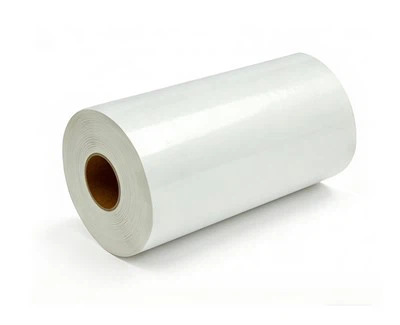
As a supplier of Polyvinylidene Chloride (PVDC) plain film, I’ve witnessed firsthand the importance of flexibility in various industries. PVDC plain film is widely used in food packaging, medical applications, and electronics due to its excellent barrier properties. However, precisely measuring the flexibility of this film is crucial for ensuring it meets the required standards for different end – uses. Polyvinylidene Chloride Plain Film

Understanding the Significance of Flexibility in PVDC Plain Film
Flexibility is a key characteristic of PVDC plain film as it directly impacts its usability. In food packaging, for example, flexible PVDC film can conform to the shape of the product, providing a snug fit that helps in maintaining the freshness and quality of the food. It also allows for easy handling during the packaging process, reducing the risk of film breakage. In medical applications, flexible film is essential for creating pouches and wraps that can be easily molded to the contours of medical devices or dressings.
Common Methods for Measuring Flexibility
There are several well – established methods available to measure the flexibility of PVDC plain film. These methods are designed to simulate real – world conditions and provide quantitative data that can be used for quality control and product development.
Tensile Testing
Tensile testing is one of the most commonly used methods for assessing the mechanical properties of polymers, including PVDC plain film. In this test, a specimen of the film is placed between two grips, and a gradually increasing tensile force is applied until the film breaks. The values measured during this test include the ultimate tensile strength, the yield strength, and the elongation at break.
The ultimate tensile strength represents the maximum stress the film can withstand before breaking. A higher ultimate tensile strength generally indicates a stronger film, but it doesn’t necessarily mean better flexibility. The yield strength is the stress at which the film begins to deform plastically. The elongation at break, which is the percentage increase in the length of the film at the moment of fracture, is a key indicator of flexibility. A higher elongation at break value suggests that the film can be stretched more before breaking, indicating greater flexibility.
To conduct a tensile test, a universal testing machine equipped with appropriate grips for film specimens is required. The specimen should be prepared according to standard dimensions, usually in the form of a rectangular strip. The test is typically carried out at a constant cross – head speed, and multiple specimens are tested to obtain reliable results.
Bend Testing
Bend testing is another method used to evaluate the flexibility of PVDC plain film. In a bend test, a film specimen is bent to a specific angle, and the force required to achieve this bend is measured. This test helps to determine the film’s resistance to bending and its ability to recover its original shape after being bent.
There are different types of bend tests, such as the MIT folding endurance test. In the MIT folding endurance test, a film specimen is folded back and forth under a specified load until it breaks. The number of folds the film can withstand before breaking is a measure of its flexibility and durability. A higher number of folds indicates better flexibility and resistance to fatigue.
Dynamic Mechanical Analysis (DMA)
Dynamic Mechanical Analysis is a more advanced technique for measuring the viscoelastic properties of PVDC plain film, which are closely related to its flexibility. DMA measures the response of the film to a small oscillating force over a range of temperatures and frequencies.
By analyzing the storage modulus, loss modulus, and damping factor obtained from DMA, we can gain valuable insights into the film’s molecular structure and its behavior under dynamic conditions. The storage modulus represents the elastic component of the film’s response, while the loss modulus represents the viscous component. The damping factor, which is the ratio of the loss modulus to the storage modulus, is a measure of the film’s ability to dissipate energy when deformed.
A lower storage modulus and a higher damping factor generally indicate a more flexible film. DMA can also be used to study the effect of temperature on the film’s flexibility, which is important for applications where the film may be exposed to different temperature conditions.
Factors Affecting the Flexibility of PVDC Plain Film
In addition to the measurement methods, it’s important to understand the factors that can affect the flexibility of PVDC plain film. These factors can be broadly categorized into two groups: material – related factors and processing – related factors.
Material – Related Factors
- Molecular Weight: The molecular weight of the PVDC polymer has a significant impact on the film’s flexibility. Generally, a higher molecular weight results in a more rigid film, while a lower molecular weight leads to greater flexibility. This is because higher – molecular – weight polymers have longer chains and more intermolecular interactions, which restrict the movement of the polymer chains.
- Additives: The addition of plasticizers is a common way to improve the flexibility of PVDC plain film. Plasticizers are low – molecular – weight compounds that are added to the polymer matrix to reduce the intermolecular forces between the polymer chains, allowing them to move more freely. Other additives, such as lubricants and stabilizers, can also affect the film’s flexibility to some extent.
Processing – Related Factors
- Extrusion Conditions: The extrusion process is a critical step in the production of PVDC plain film. Parameters such as extrusion temperature, screw speed, and die design can all influence the film’s flexibility. For example, a higher extrusion temperature can result in better melting and mixing of the polymer, which may lead to a more homogeneous film with improved flexibility.
- Stretching Process: Stretching the film during production can also affect its flexibility. Uniaxial or biaxial stretching can align the polymer chains, which can improve the film’s mechanical properties. However, excessive stretching can cause the film to become more rigid and less flexible.
Quality Control and Assurance
As a supplier, we place great importance on quality control and assurance. To ensure that our PVDC plain film meets the required flexibility standards, we conduct regular tests using the methods described above.
We start by sourcing high – quality raw materials and carefully controlling the extrusion and stretching processes. During production, we take samples at regular intervals and perform in – house tests to monitor the film’s flexibility. We also send samples to independent testing laboratories for verification.
By maintaining strict quality control measures, we can provide our customers with PVDC plain film that consistently meets or exceeds their expectations in terms of flexibility and other performance properties.
Conclusion
Measuring the flexibility of PVDC plain film is a complex but essential task for suppliers and users alike. By using a combination of tensile testing, bend testing, and dynamic mechanical analysis, we can obtain a comprehensive understanding of the film’s flexibility. Understanding the factors that affect flexibility, such as molecular weight, additives, extrusion conditions, and stretching processes, is also crucial for optimizing the production process and ensuring product quality.
Polyvinylidene Chloride Plain Film If you are in the market for high – quality PVDC plain film with excellent flexibility, we are here to serve you. Our team of experts can work with you to understand your specific requirements and provide customized solutions. Whether you need film for food packaging, medical applications, or electronics, we have the expertise and resources to meet your needs. Contact us to start a procurement discussion and find out how our PVDC plain film can enhance your products.
References
- ASTM D882 – 18, Standard Test Method for Tensile Properties of Thin Plastic Sheeting.
- ASTM D2176 – 16, Standard Test Method for Folding Endurance of Paper by MIT Tester.
- Ferry, J. D. (1980). Viscoelastic Properties of Polymers. John Wiley & Sons.
Sinosealed Packaging Solutions Limited
With a professional production team, we are one of the most experienced polyvinylidene chloride plain film manufacturers and suppliers in China. Please rest assured to buy high quality polyvinylidene chloride plain film for sale here from our factory. For price consultation, contact us.
Address: Luohe City, Henan Province, China
E-mail: contact@barrierpackage.com
WebSite: https://www.barrierpackage.com/
