Hey everyone, if you’ve ever stared at a utility meter and wondered how those little connectors hook up so seamlessly (no sparks, no leaks, no weird glitches), you’re not alone. As someone who’s been in the meter connectors game for over 10 years—turns out there’s a whole lot more to these tiny parts than meets the eye. A question I get all the time, both from new clients and folks just learning the ropes: Are there actually standards for meter connectors? Short answer? Yep, but they’re not one-size-fits-all. Let’s break this down like we’re chatting over a coffee (no stuffy jargon, promise). Meter Connectors
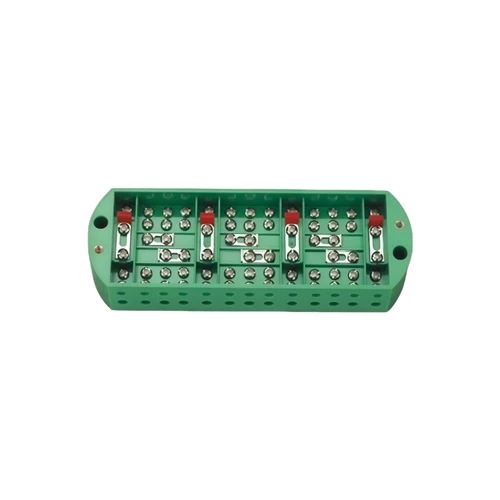
First off, let’s get real—what even is a meter connector? For context, we’re talking about the parts that link utility meters to the lines that carry power, gas, or water to homes and businesses. These little guys have to do some heavy lifting: stand up to extreme temps, humidity, maybe even rodents chewing on wires, and make a tight, reliable connection 24/7. Mess that up, and you get downtime, safety hazards, or even a utility bill that makes zero sense. So standards aren’t just random rules—they’re there to keep things safe and consistent.
Now, the big split: these standards depend on where you’re located, and what type of meter we’re talking about. Let’s start with North America, since that’s the region I work with most. Over here, the main players are ANSI (American National Standards Institute) and UL (Underwriters Laboratories). For residential and commercial electric meter connectors, ANSI C12.10 is the big one. It lays out everything from the size of the pins to how much current they can handle. For example, a standard 120/240V residential meter connector has to handle at least 200A—no exceptions. UL 1953 is another big one, specifically for electric meter sockets and connectors; it tests for things like durability (how many times you can plug/unplug it before it wears out—hint: way more than you’d think) and fire resistance. We’ve got a whole line that’s UL-listed, and I can tell you, we don’t cut corners on meeting that threshold. Even our bulk stock gets random third-party checks, not just the initial certification.
Wait, but what about gas and water meters? Those have their own set of rules, right? For water meters in North America, AWWA (American Water Works Association) standards are the go-to—specifically AWWA C111 for mechanical connectors that link the meter to water lines. These have to be corrosion-resistant, since water (especially hard water) can eat away at metal parts. For gas, it’s more about pressure and material; NFPA (National Fire Protection Association) has guidelines here, since gas connectors can’t leak—even a tiny gap is a huge safety risk. We actually had a client a couple years ago who tried to use a cheap, uncertified gas connector on a commercial job, and it failed a pressure test. Had to replace all 50 of ‘em with our NFPA-compliant ones—saved ‘em from a big headache later.
Now, if you’re reading this outside North America, things shift a lot. The International Electrotechnical Commission (IEC) has global standards, but a lot of countries have their own national tweaks. Europe uses EN standards—like EN 62053 for electric meters, which covers connector safety and performance. They’re big on energy efficiency too, so EN standards also make sure connectors don’t waste power through resistance. Australia and New Zealand go with AS/NZS standards, which are similar to IEC but adjusted for their extreme climate—think hot, dry outback vs. humid coastal areas, so connectors have to handle more temperature swings. We work with a few clients in Australia, and their standards require a specific UV-resistant coating that we don’t need for North America—small detail, but it makes a huge difference for durability.
Here’s the thing that surprises a lot of new people: standards aren’t just about safety. They also make parts interchangeable. If every connector was made differently, you’d have a nightmare trying to swap out a meter when it’s time for a reading or maintenance. I remember early in my career, a utility tried to use a random connector brand on a new housing development, and when their techs went to replace a meter 6 months later, the pins didn’t line up. Total waste of time and money. Following standards means that whether you’re in New York or Dallas, a certified connector will work with any certified meter that meets the same specs. That’s the whole point—consistency for everyone involved.
But wait, are there gray areas? Absolutely. A lot of people ask about “custom” meters for industrial use, like a factory that needs a meter for 1000A. Does that have to meet the same standards as a residential one? Mostly, but with extra tiers. We make custom connectors for industrial clients that are still ANSI/UL-compliant, but they’re built to handle higher currents and harsher environments—like factories with heavy machinery or outdoor mining operations. The base standards are non-negotiable for safety, but you can adjust materials or design as long as you hit those core benchmarks.
Another common question: do standards change? Yep, they evolve as technology does. A few years back, smart meters blew up—all those digital meters that send readings automatically instead of someone coming to your door. The old standards didn’t account for the extra data lines in the connector. So ANSI updated C12.10 a couple years ago to add specs for smart meter connectors, making sure they can handle both power and data without interference. We had to rework half our product line to meet the new version, but it was worth it—now our smart meter connectors are some of the most reliable on the market. No more signal drops or data glitches because of a bad connector.
Let’s talk about what this means for you, if you’re a utility company, an installer, or someone buying these parts. First, never skip certified connectors. I’ve seen way too many people go for the cheap no-name ones online, thinking “they all look the same.” Spoiler: they’re not. A certified connector has been tested for heat, pressure, resistance, and durability. A non-certified one might work for a little while, but it’ll fail eventually—and when it does, it’s your problem to fix. We get so many calls from folks who bought a cheaper connector from some random seller, and now their meter is misreading, or worse, there’s a safety issue. It’s just not worth the risk.
If you’re sourcing these parts, ask for proof of certification. A good supplier won’t hesitate to send you UL reports, ANSI compliance docs, whatever you need. That’s a sign they care about doing things right, not just making a quick buck. We post all our compliance docs on our client portal—no hoops to jump through, just transparency.
Now, as someone who sells these connectors, I’ll be real with you: standards aren’t just red tape. They’re what make my job make sense. When a utility calls us, they know our parts will fit their meters, meet safety rules, and last. I’ve been in this business long enough to see the mistakes that happen when you cut corners on standards. A few years back, a storm took out a whole neighborhood’s meters because a cheap connector corroded and broke during high winds. That could’ve been avoided if they used a certified, weather-resistant connector—something we make.
Wait, let’s touch on a small but important detail a lot of people miss: meter connectors vs. meter sockets. Sometimes people mix these up. The socket is the part on the meter itself, or the wall, and the connector is the plug that hooks the meter to the line. Both have standards, but they’re separate. So when you’re ordering, make sure you’re asking for the right part that meets the specific standard for your application. For example, a residential electric connector needs to be compatible with a UL-listed socket, per ANSI C12.10.
Another thing: regional codes. Sometimes cities or states will have extra rules on top of national standards. California, for example, has stricter fire safety codes for outdoor utility parts, so their connectors need to meet both ANSI and California’s Title 24. We make adjustments for that automatically, so if a client in California orders, we make sure it checks all their boxes without them having to ask. That’s the kind of attention to detail that keeps clients coming back.
I know this might sound like a lot of rules, but think about it—these connectors are the link between your home’s power, gas, or water and the whole infrastructure. You don’t want that link to fail, especially when you’re relying on it every single day. Standards are there to protect you, the installer, the utility, everyone.
So to circle back to the original question: Are there standards for meter connectors? Definitely. They vary by region, by meter type, by industry, but they exist to keep things safe, reliable, and consistent. No, there’s not one universal standard across every country and every type of utility, but that’s a good thing—climate, building codes, and technology change, so standards change too.
If you’re in the market for meter connectors—whether you’re a big utility, a small installer, or someone who just needs a replacement part for a project—don’t settle for uncertified. Do your homework, ask for compliance proof, and work with a supplier who knows their stuff. We’ve been supplying compliant, high-quality meter connectors for over a decade, and we’ve helped hundreds of clients avoid the headaches that come with non-compliant parts. Whether you need residential, commercial, industrial, smart meter, gas, water—we’ve got you covered, and we’ll make sure every part meets all the right standards for your region and needs.

If you’ve got questions about which standard applies to your project, or you’re ready to get pricing and lead times, reach out to us anytime. We’re here to help you get the right part, no confusion, no hidden catches.
Cable Glands References:
American National Standards Institute (ANSI) C12.10-2020, American Standard for Electric Meters – AC Watt-hour Meters (0.5, 0.2, and 0.1 Accuracy Classes)
Underwriters Laboratories (UL) 1953, Standard for Safety for Electric Meter Sockets, Adapters, and Connectors
American Water Works Association (AWWA) C111-19, Mechanical Joints for Steel Pipe, Fittings, and Valves
National Fire Protection Association (NFPA) 54, National Fuel Gas Code
International Electrotechnical Commission (IEC) 62053-21, Electricity Metering Equipment (AC) – Part 21: Specific Requirements for Static Watt-hour Meters for Active Energy (Classes 0.2S and 0.5S)
Hangzhou Lingcheng Technology Co., Ltd.
We are one of the most professional meter connectors manufacturers and suppliers in China. With a professional production team, we are able to meet the needs of the majority of our customers. Please feel free to wholesale bulk high quality meter connectors from our factory. Customized orders are welcome.
Address: Room 1613, 16th Floor, Building 3, No. 99 Wangzhou Road, Liangzhu Street, Yuhang District, Hangzhou City, Zhejiang Province
E-mail: LCKJ0408@163.com
WebSite: https://www.lingchengelectric.com/
