Hey everyone, thanks for stopping by my stainless steel tanks blog— I’m Jake, and I’ve been supplying custom steel tanks for breweries, food processing plants, and chemical manufacturers for over 10 years. These days, I get so many questions from first-time buyers who can’t wrap their heads around vertical vs horizontal tanks. It’s not just about picking a shape, y’know? There’s a ton of science and practical use that goes into choosing the right one, and picking the wrong tank can cost you way more in the long run—like lost product, messed up batch runs, or even safety issues. Let’s break this down straight, no corporate jargon, just what actually matters. Stainless Steel Tanks
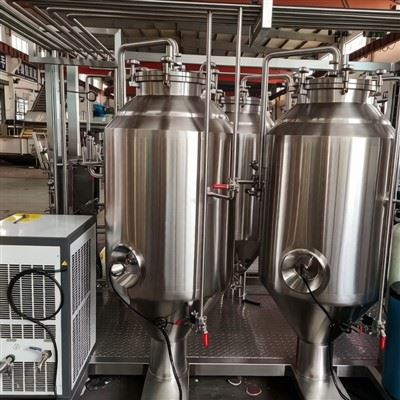
First, let’s get the basics out: vertical tanks stand upright on a flat, concrete or steel base, like a big metal water bottle you’d stand on its bottom. Horizontal ones lay flat on their side, like a beer keg you’d roll on the floor. But that’s just the shape on the outside—what’s under the hood that changes everything?
Starting with space and footprint, because that’s usually the first thing people care about, especially if they’re working with a tight facility. Let’s say you’ve got a small brewing space where every square foot is gold. A vertical tank will fit way more volume in a smaller horizontal area, right? Wait, let me do the math real quick (no fancy calculators, just rough for example). A 500-gallon vertical tank is roughly 6 feet tall and 3 feet wide. That same 500 gallons as a horizontal tank would be 8 feet long and 4 feet in diameter. So if you’re cramming tanks along a wall, vertical lets you stack them too—double-stack, even triple-stack if your ceiling is high enough. I’ve had clients with 10-foot ceilings stack two 500-gallon verticals, doubling their storage without adding a single inch to their floor plan. That’s a game-changer for small batch producers who can’t afford a new facility just for more tanks.
Horizontal tanks? They’re the opposite. You need a wide, open area to lay them flat, and they don’t stack—you can’t set one horizontal tank on top of another, it’s unstable as hell. That’s why you almost see horizontal tanks in places like trucking yards, remote processing plants, or facilities where you have a ton of open ground space but limited ceiling height. A lot of mobile fueling operations or agricultural bulk storage folks go horizontal because they can roll ‘em onto flatbed trucks easier, too. Oh, and don’t forget: horizontal tanks need extra clearance at the ends for fittings, while vertical ones just need space around the sides and top.
Next up, material and pressure handling, which is super critical if you’re storing something volatile, pressurized, or corrosive. Stainless steel is our go-to for both, but the way we build them changes based on shape, especially for pressure. Vertical tanks are designed to handle static pressure—like liquids just sitting inside, or low-pressure processes such as cold storage, fermentation, or water holding. Their vertical orientation means the pressure from the liquid’s weight pushes straight down along the cylinder wall, so we can use thinner gauge steel (14, 16 gauge) for standard applications. But if you’re running a pressurized process, like carbonating drinks or cooking with steam under pressure, vertical tanks still work because their top is a flat or slightly dished head that can handle upward pressure without bowing.
Horizontal tanks, though—they’re built for higher pressure, mostly because their design distributes pressure more evenly along the entire length of the cylinder. Think about it: if you have a horizontal tank holding 150 PSI, the pressure pushes outward on every inch of the curved wall, and since it’s laid flat, there’s less stress on the end heads than a vertical tank would get from the same pressure. That’s why horizontal tanks are the go-to for bulk compressed gas, chemical storage, or even transport tanks. We usually use thicker gauge steel (10, 12 gauge) for horizontal pressure tanks, and reinforce the end heads with extra steel rings to prevent bulging. I once had a client who tried to use a 1000-gallon vertical tank for pressurized chemical mixing—within a month, the top head started bowing, and he had to replace it with a horizontal. Lesson learned, right?
Then there’s access and maintenance, which is another big one that most people don’t think about until it’s a problem. If you need to clean a tank, inspect for buildup, or get to fittings like drains or sensors, vertical tanks are way easier to access. The top is fully open, usually with a manhole or hatch that’s big enough for a person to climb into (if it’s a large tank, like 10,000 gallons) or at least to stick your arms in for scrubbing. The drain is at the very bottom center, so all the liquid flows out completely—no leftover gunk sitting in corners. For brewing, that means less cross-contamination between batches, which is huge for beer or coffee roasters that don’t want a hint of last week’s IPA in this week’s stout.
Horizontal tanks? They’re a pain in the butt to maintain. You can’t climb into a horizontal tank easily because it’s lying flat, so most cleaning has to be done from the two ends. The drain is at the bottom center of the tank’s length, so if you have a large horizontal tank, there might be small pockets at the very ends that don’t drain fully. That means leftover product or sediment builds up over time, and you have to tear into the tank way more often to scrub those corners. I’ve had food processing clients switch from horizontal to vertical just because the maintenance time was cutting into their production runs. On the flip side, if you’re storing bulk grain or dry goods, horizontal tanks might be easier because you can roll a cleaning hose along the inside, but for liquid products, it’s a hassle.
Cost is a big one too, and it’s not just the initial price tag—installation, long-term maintenance, even material costs. Vertical tanks are generally cheaper upfront, mostly because they use less steel. Let’s go back to the 500-gallon example: vertical is ~3 feet wide, so the surface area of the cylinder is smaller, plus you can get standard base parts from our warehouse, no custom fabrication needed. Installation is simpler too—you just set it on a level base, bolt it down, and hook up your plumbing. Horizontal tanks require custom skids or supports, because you can’t just set them on the ground; they need steel frames to keep them steady and prevent rocking when they’re full. That adds 15-20% to the initial cost right there.
Wait, but don’t get me wrong—horizontal tanks have their cost perks too, long-term. If you’re using them for transport, you don’t need to move vertical tanks around as easily, so horizontal saves on mobile mounting costs. And for large volume (over 10,000 gallons), horizontal tanks often have a lower cost per gallon than vertical, because the steel distribution is more efficient for long, flat shapes. I’ve seen a 20,000-gallon horizontal tank cost about 10% less per gallon than a same-volume vertical, because we don’t have to reinforce the vertical’s tall, thin walls as heavily. But for small to medium volumes (100-5000 gallons), vertical is almost always the cheaper pick.
Applications—let’s talk real-world uses, so you can match your needs. Vertical tanks are everywhere in craft brewing, right? Fermenters, brite tanks, cold storage—almost all breweries use verticals because they fit tight brewhouse spaces and are easy to move between batch stages. Food and beverage processing: holding milk, juice, or syrup, all static storage where you need easy access. Water treatment: holding tanks, sedimentation tanks, vertical is standard. Even residential use—rainwater collection, septic tanks (wait, no, septic is usually plastic, but rainwater storage often uses vertical stainless steel).
Horizontal tanks? You’ll see ‘em in transportation: tanker trucks, railcars, even portable storage containers that get moved around. Agricultural bulk storage: holding fertilizer, grain, or water for farms where you have open fields and need to store a lot of product without taking up space on the farm’s main buildings. Chemical processing: storing solvents, acids, or other hazardous materials that need to be pressurized, because horizontal’s pressure resistance is better. Oh, and for above-ground storage where height is a problem—like if you’re in a warehouse with a low ceiling, you can’t fit a 10-foot tall vertical, so you go horizontal laying flat.
Wait, there are a few misconceptions I need to clear up, because I get these all the time. First, “vertical tanks can only hold small volumes.” No, we make vertical tanks up to 50,000 gallons—they just get taller, obviously. I supplied a 40,000-gallon vertical tank to a water treatment plant last year; it’s 20 feet tall, but they had the ceiling height to fit it, so no problem. Second, “horizontal tanks are stronger.” That’s only true for pressure, like I said earlier. If you’re storing non-pressurized liquid, a vertical tank is just as strong as a horizontal, and way easier to work with. Third, “you can convert a vertical to horizontal or vice versa.” Nope, not possible. The structural design is totally different—you’d have to completely re-build it, which is more expensive than just buying a new tank.
Also, let’s talk about customizations, because that’s where a lot of buyers need flexibility. Both tanks can have all the same fittings: CIP ports, temperature sensors, level gauges, drain valves. But vertical tanks have more room on top for extra fittings, like manways, or even mixers. I can add a top-mounted mixer to a vertical tank no problem, because there’s flat surface on the lid. Horizontal tanks have fittings mostly on the ends, so if you need a mixer, it has to be side-mounted, which is less efficient and can cause more vibration. Another customization: insulation. If you need heated or insulated tanks, vertical tanks are easier to insulate because you can wrap their upright walls with foam or metal cladding without having to work around a curved horizontal shape.
Now, let’s wrap this up with what I tell every client when they come to me confused: first, measure your space. How much floor area do you have? What’s your ceiling height? If you have a narrow space with high ceilings, go vertical. If you have wide, open ground with low ceilings, go horizontal. Second, what are you storing? If it’s static liquid, unpressurized, needs easy cleaning, vertical. If it’s pressurized, hazardous, or needs transport, horizontal. Third, what’s your budget? Small to medium volume = vertical, big volume = weigh the cost per gallon.
At the end of the day, both vertical and horizontal stainless steel tanks are built to last (we use food-grade 304 or 316 stainless, no cheap metal here) but they’re for totally different jobs. I’ve seen so many buyers pick the wrong one just because they didn’t understand the differences, and it leads to headaches down the line.
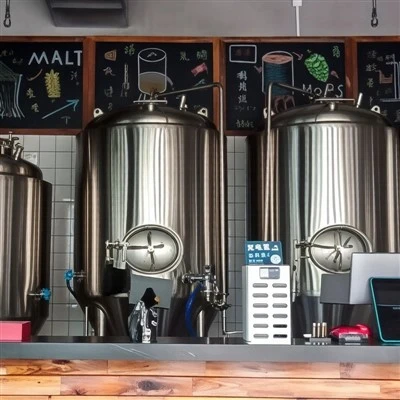
If you’re in the market for a stainless steel tank—whether it’s a vertical fermenter for your new brewery, a horizontal chemical tank for your processing plant, or anything in between—hit me up for a chat. I don’t do pushy sales tactics, I just give you the straight facts, help you pick the right size and shape for your needs, and make sure you get a tank that’ll work for years, not just a quick fix. Shoot me a message to start the conversation, and we can talk through your specific project.
Auxiliary System References
- ASME Boiler and Pressure Vessel Code (BPVC) Section VIII, Division 1: Rules for Construction of Pressure Vessels, American Society of Mechanical Engineers, 2023
- Stainless Steel Tanks: Design, Fabrication, and Applications, National Association of Stainless Steel Tank Manufacturers, 2022
- Industrial Storage Tank Selection Guide, Process Equipment Manufacturers Association, 2021
- “Cost Analysis of Vertical vs Horizontal Storage Tanks,” Journal of Industrial Fluid Storage, 2020, Vol. 18, No. 2, pp. 45-52
Wenzhou Jinggong Machinery Equipment Co., Ltd.
We are one of the most professional stainless steel tanks manufacturers and suppliers in China. With abundant experience, we warmly welcome you to buy customized stainless steel tanks at competitive price from our factory. If you have any enquiry about quotation, please feel free to email us.
Address: No.Jiadi Industrial Zone, Yaoxi Town, Longwan District, Wenzhou City, China.
E-mail: jinggong2026@163.com
WebSite: https://www.jg-ind.com/
