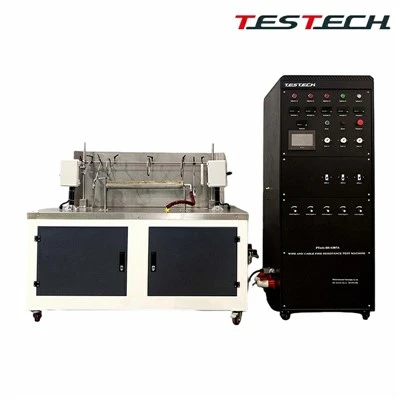
If you’ve ever walked through an aerospace hangar, a shipping terminal, or a bus manufacturing plant, you’ve probably seen dozens of compliance labels stuck to seats, floor panels, cargo liners, and wiring insulation. Those labels aren’t just bureaucratic red tape—they’re proof that every material in the transportation (whether it’s a commercial airliner, a long-haul truck, a passenger bus, or a freight rail car) has passed strict flammability testing. And at the heart of that testing is the Transportation Material Flammability Tester: a compact, specialized piece of equipment designed not just to ignite samples, but to do the critical work of analyzing the combustion products that can make or break a vehicle’s safety. As a supplier who’s worked with testing labs and transportation manufacturers across North America and Europe for over a decade, I’ve seen firsthand how misunderstood this part of the testing process is. Most people focus on the flame itself—how long it takes to consume a sample, whether it self-extinguishes—but the real risk of in-transportation fires often lives in the smoke and toxic gases that come off burning materials. Today, I want to pull back the curtain on how our testers analyze those combustion products, why that step is non-negotiable, and what it means for anyone responsible for keeping passengers and cargo safe on the road, in the air, or at sea. Transportation Material Flammability Tester
Let’s start with the basics: when a transportation material burns, it doesn’t just turn to ash. Depending on what it’s made of—whether it’s the polyester in a bus seat cushion, the polycarbonate in a cockpit window, the rubber in a tire, or the insulation around a train’s wiring—it releases a complex mix of gases and particles. Common culprits here include carbon monoxide (CO), which kills more fire victims than flames themselves, hydrogen cyanide (HCN) from plastics, and tiny particulate matter (PM) that can clog respiratory systems and obscure visibility during an evacuation. The goal of combustion product analysis is to quantify these substances accurately, so we can predict exactly how a fire in a vehicle will behave—and whether the materials used meet global standards like FAA 25.853 for aircraft, FMVSS 302 for motor vehicles, or EN 45545 for rail.
Our Transportation Material Flammability Testers aren’t single-function devices. They’re modular systems designed to follow a set, standardized test protocol, and the combustion product analysis step happens in a dedicated, sealed combustion chamber. Here’s how that process unfolds, step by step, in the tester: first, a small, pre-weighed sample of material is mounted in a holder inside the chamber, which is kept at a consistent pressure and temperature to eliminate variables that could skew results. For surface materials like seat covers or floor panels, the sample is usually 75mm x 305mm, while for thicker materials like foam cushions, it’s cut to a specific thickness that mimics real-world use. Once the sample is in place, we purge the chamber with clean air to remove any residual gases from previous tests, then ignite the material with a calibrated flame that mimics the heat of a typical in-transportation fire.
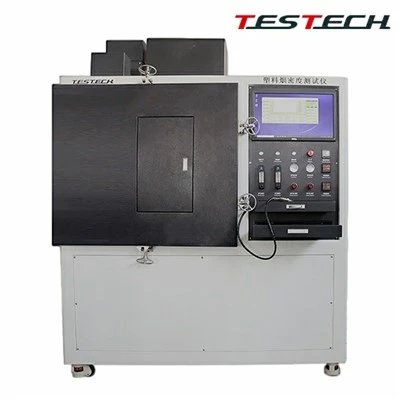
Now, the part everyone asks about: how do we actually collect and analyze the combustion products that stream out of the chamber? The first key component is the exhaust system, which is designed to pull the smoke and gases through a series of filters and sensors at a constant flow rate. For particulate matter, we use pre-weighed glass fiber filters that capture all the solid and liquid particles in the smoke. After the test run, we weigh the filter again, and the difference between the pre-test and post-test weight gives us the total particulate matter emission—this is critical because thick, opaque smoke can prevent passengers from finding exits in as little as 30 seconds, a stat I learned early on when working with a major bus manufacturer that had to redesign its seat foam after our testing showed it produced 20% more smoke than the industry limit.
Next, we move on to gaseous combustion products, and this is where the science gets specific. The exhaust line from the chamber is connected to a Fourier-Transform Infrared (FTIR) Spectrometer, a tool that’s become the gold standard for accurate gas analysis in flammability testing. Here’s how it works: each gas molecule absorbs infrared light at a unique wavelength, like a fingerprint. The FTIR spectrometer passes infrared light through the sample gas stream, measures how much light is absorbed at each wavelength, and then uses a reference database to match those absorption patterns to specific gases. That means we can quantify not just carbon monoxide and carbon dioxide (CO2, which tells us how complete combustion is), but also hydrogen chloride, nitrogen oxides, and any other toxic byproducts in a single test run—no need for multiple separate analyses. For our customers who work with materials that might release very low concentrations of toxic gases, we also add a electrochemical sensor module to the system, which can detect parts per million levels of HCN and CO, well below the threshold where they become dangerous to human health.
But wait—what about real-world conditions? A lot of early flammability testing used to ignore the fact that transportation fires often burn in oxygen levels lower than normal atmospheric air, or in enclosed spaces that trap smoke. That’s why our testers let you adjust the oxygen concentration in the combustion chamber between 15% and 21%, mimicking both the open conditions of a cargo hold and the partially enclosed space of a passenger cabin. When we run tests at lower oxygen levels, the combustion is incomplete, which means more toxic gases and particulate matter are released—and our analysis system is calibrated to account for that, so the results are far more relevant to actual in-transportation fire risks, not just lab conditions.
I’ve seen too many testing labs skip the detailed combustion product analysis step, relying only on flame spread rate and self-extinguishment time to pass a sample. That’s a mistake, and it’s one that can have life-threatening consequences. A few years back, we worked with a small regional airline that had approved a new seat cover material based on flame tests alone, thinking it was safe. When we ran the full combustion product analysis, we found that the material released high levels of CO at a rate that exceeded FAA limits. The airline was forced to pull the seat covers from all its new planes, delaying production by three months, but saving them from a potential disaster. That’s why for our company, combustion product analysis isn’t an add-on—it’s the core of what makes our Transportation Material Flammability Testers valuable, not just another piece of test equipment.
Another part of the process that makes our analysis unique is the real-time data logging. A lot of older testers only capture data at the end of the test, but our systems log gas and particulate levels every second, so we can track how emission rates change over time. For example, a plastic wiring insulation might burn slowly, releasing low levels of CO for the first minute, then spike when the insulation finally melts. That real-time data helps manufacturers identify weak points in their materials, so they can adjust formulas before a full production run. We also integrate our testers with cloud-based software, so our customers can store all their test results, run comparative analyses between different material formulations, and update compliance documentation with just a few clicks—something that’s become essential as transportation standards around the world get more strict, especially with the rise of electric vehicles, which bring new fire risks from battery thermal runaway.
Let’s talk about how this applies specifically to electric vehicles (EVs), which are a fast-growing segment of the transportation industry and a big focus for our team right now. EVs have hundreds of pounds of plastic and composite materials, plus lithium-ion batteries that can catch fire and burn at much higher temperatures than traditional gasoline-fueled vehicles. When a battery burns, it releases gases like methane, ethylene, and even fluorine compounds from the battery’s electrolyte—substances that traditional flammability testers wouldn’t even look for. Our Transportation Material Flammability Tester’s FTIR system is calibrated to detect these unique EV battery combustion byproducts, so manufacturers can test not just the interior materials, but also the battery enclosure materials, which are designed to contain fires and prevent toxic gas release into the passenger cabin. We’ve worked with several startup EV makers over the past two years, helping them pass their first round of national safety testing by catching a flaw in their battery enclosure foam—our analysis showed the foam released too much CO when exposed to battery fire temperatures, so they switched to a mineral-based foam that cut CO emissions by 70%.
Of course, none of this works if the equipment isn’t accurate. Over the years, we’ve invested heavily in calibrating our testers to match international standards, from the FAA’s test protocols to ISO 5659, which is the global standard for smoke density and gas analysis in fire tests. Every component—from the flow rate sensor that pulls the exhaust gases to the FTIR spectrometer’s calibration routine—is checked monthly against reference standards, so our customers can trust that the results they get are exactly what regulators will accept. We also provide training with every tester we sell, because even the best equipment won’t give good results if the operator doesn’t know how to set up the sample correctly or calibrate the gas sensors. Last year, a small testing lab in Germany called us because their initial test results for a new rail seat material showed higher smoke levels than expected; after a quick on-site training session, we realized their sample was mounted incorrectly, blocking the exhaust flow, which skewed the particulate matter reading. We fixed the issue together, and they went on to pass EN 45545 testing for their client.
I know that for many of our customers, the bottom line is speed and cost. Transportation manufacturers need to get new materials to market fast, and testing can be a bottleneck. That’s why we designed our testers to streamline the combustion product analysis process without sacrificing accuracy. The entire test run, including sample ignition, exhaust collection, and gas analysis, takes less than 15 minutes for most materials—way faster than the 2 or 3 hours many older systems require. And because we don’t need multiple separate tools for particulate and gas analysis, our testers take up half the space of comparable systems, which is a big plus for labs with limited bench space.
At the end of the day, the work we do isn’t just about selling a piece of equipment. It’s about helping keep people safe when they take a bus to work, fly home to visit family, or ship goods across the country. The combustion products from burning transportation materials are one of the most underappreciated risks in vehicle safety, and that’s why every Transportation Material Flammability Tester we build is designed to analyze those products thoroughly, accurately, and in a way that works for real-world manufacturing and testing needs. If you’re a manufacturer, testing lab, or transportation regulator looking for a reliable partner to help you meet global safety standards, we’re here to help. We can walk you through the combustion product analysis process, show you how our testers integrate into your existing workflow, and help you find a solution that fits your specific needs. Don’t hesitate to reach out to start a conversation about your flammability testing requirements.
Wire Cable Flammability Tester References
ISO 5659-2:2017, Smoke generation – Part 2: Determination of optical density by a single-chamber test
FAA Part 25.853, Airworthiness Standards: Transport Category Airplanes, Flammability, Smoke, and Toxic Gas Emissions
FMVSS No. 302, Flammability of Automotive Materials
EN 45545-2:2020, Railway Applications – Fire Protection on Railway Vehicles – Part 2: Requirements for Fire Behaviour of Materials and Components
TESTech Instrument (Suzhou) Technologies
TESTech Instrument (Suzhou) Technologies is one of the most reliable transportation material flammability tester manufacturers and suppliers in China. If you’re going to wholesale durable transportation material flammability tester, welcome to get quotation from our factory. For price consultation, contact us.
Address: 8/F, R&D and Production Workshop No. 5, Jiangsu Guoqian Technology Innovation Industrial Park, 168 Lüliangshan Road, Huqiu District, Suzhou, Jiangsu Province, China
E-mail: sales@testech.com.cn
WebSite: https://www.testechfiretest.com/
